Is it possible to enjoy your renovation process?
Learn what Tanya did to enjoy their renovation process, improve communication with their builder, and keep their project on track during construction.
All while reducing stress during design and construction through better preparation.
Listen to the episode now.
Hello! This is Episode 395, and this is Part 2 of my conversation with HOME Method member, Tanya, about the renovation of their Melbourne home that they’ve now been enjoying living in for a year, and experiencing the results of their efforts in how it functions and performs.
In the last episode, we heard how Tanya used the Brief Builder inside HOME Method to get really clear on how she and her family wanted to live, and how that helped her confidently choose her team and set her project up for success.
If you missed Part 1, you can head to Episode 394 to listen or download the free PDF transcript.
In this episode, we dive into what happened next.
You’ll hear how that upfront clarity and preparation flowed into their construction phase, and why Tanya describes that part of the project as calm, collaborative and genuinely enjoyable.
LISTEN TO THE EPISODE NOW.

We talk about how their site meetings were run, the way they managed communication and record keeping during the build, and how front loading their decisions meant they weren’t second guessing things or making stressful choices on the fly.
Tanya also shares how they reduced demolition waste by rehoming materials before construction began, and what it’s been like to live in the home now, after a year, and experience the results of all that time, effort and intention.
I hope hearing Tanya’s experience gives you a sense of what’s actually possible when you take the time to get educated at the beginning, create clarity in your intentions and goals, surround yourself with the right team, and approach your project in a more informed and collaborative way.
What I love about Tanya’s story is that this wasn’t about luck. It was about preparation, clarity, and having the right tools and support to make confident decisions along the way.
And the result is not just a beautiful, functional, thermally comfortable home, but an experience of creating it that she and her partner genuinely enjoyed, which is something so many homeowners don’t think is even possible.
If you’ve ever wondered whether it’s actually possible to enjoy your renovation or building project, I think you’re going to find this episode incredibly encouraging and inspiring.
Before we dive into the conversation, let me give you some context on timing.
Tanya joined HOME Method in January, 2021, and her renovation was completed in January 2025. Construction began on the project in July, 2024, after Tanya and her partner worked with their designer, Altereco and their builder, Two Tone Construction, in a collaborative model during an involved pre-construction process. This episode was recorded in late February 2026.
Let’s jump into Part 2 of my conversation with Tanya now.
This is the transcript of my conversation with Tanya, sharing how they enjoyed their renovation through better communication and preparation, and have now created a home they love living in.
Amelia Lee
Now, you’ve spoken about how front loading decisions has actually enabled construction to feel calm and enjoyable for you. Can you describe what your project communication felt like, how it was run, what your role was in it, how you were seeing that you needed to operate in that, and how that may be compared to what you’d expecting it was going to be like before you’d seen what it could be like?
Tanya
Yeah, sure. Like, all I’d heard was stressful renovation stories and particularly about that build stage. So, it seemed important that we did whatever we could to play a role in making sure that communication was smooth. So, we’ve already been working with Anthony for about six to eight months by then, in that PAC Process, the Paid As Consultant process, in the design stage. So, we already had established that level of trust and communication. And the communication was very flowing two ways, very easily.
So, I asked him in our interview about what’s the normal process for having a site meeting? And he said, “Oh, we usually do a weekly site meeting.” So, we went every Wednesday morning at 7am. It was an absolute highlight of our week to go there every week and see how all of those design decisions. which were front loaded, were all coming together. So, this was the most enjoyable part of the process, because no more decisions to be made. Everything’s already been selected. We’ve got our clear client supply list that we know we need to follow. Anthony’s got his GANTT chart of project plan that he’s following. He’s doing his part. We’re doing our part. And so, super enjoyable to come every Wednesday morning. Anthony was excited about us being there and showing us what him and his team had been working on, and then we got to see it all come to fruition. It was really cool. So, during those meetings, I would just take some quick notes on my phone of what progress had been made, what things were coming up this week, what things were happening next week? What actions we needed to take? As in, did he need something on site next week or anything? What actions Anthony had to take?
And then, when I got home, I’d quickly put it in a Google Doc, in a bit of a minutes thing, which I didn’t know whether that was my responsibility or not, but Anthony had confessed that admin was not his strength, and I didn’t want him doing admin. We wanted him building a house. So, I thought, ‘I can do admin. I can do that.’ So, I put together the minutes each week, and every single week, it was on track every single week. And so, I put together those notes and then send them to Anthony. So, we’re really clear on what we needed to do. He’s really clear on what he needed to do. And things stayed on track the whole way through the project. We had two little things that happened, hydronic heating issue that you referred to before, and some asbestos that was found in the ceiling as well. But otherwise, the entire project stayed on track the whole way through.
And so, I think that communication and the way that we all participated together really made a difference to that. I also took the opportunity each time we came to that meeting to just quickly take video and some photos, and we started up our own Insta page so we could share that with our friends and family, and people could keep up-to-date with what we were doing each week, that it was an easy way to communicate with our friends and family as well.
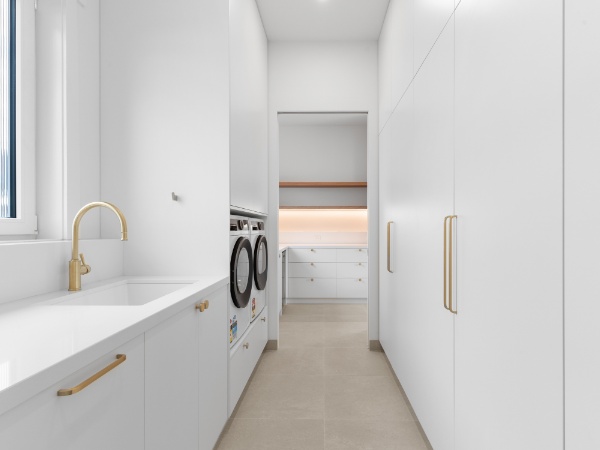
Image of Tanya’s Renovation. Photographer: Kip Scott
Amelia Lee
Yeah, it’s such a good suggestion. And I think Anthony admitted to me on the podcast that he now does do the site meeting minutes.
But I know that not all builders do, and it’s why we include that template inside the Build module of HOME Method so that you can take it. I love that you were doing that because you’ll never remember all of the discussions. You’ll never remember all of the details, and if something does go awry, you want to make sure that you’ve got recourse in writing to be able to refer back to it. But it’s lovely that you had that rhythm and that regularity to your site meetings. And your work during that pre-construction process using Anthony as a consultant during that design phase obviously served you really well in terms of being able to then make a lot of those design decisions, those selections and specifications. So the contract you signed actually reflected what you wanted, and you had as much detail fleshed out as possible. Such a great testament, because I know that a lot of homeowners can feel like they have to wait until they’re seeing it on site.
I mean, at any point, did you have any thinking, “Oh, gosh, am I going to change my mind later? Am I going to regret that I’ve locked this in so early?” Or for you, you mentioned walking down an aisle in Bunnings can be overwhelming. For you, was that, ‘Look, I know myself. I know what’s going to give me anxiety. The more I can do this now, I know that that’s going to serve me well.’ Like, was your own mindset feeding into that front loading decision as well, in terms of protecting you and working for your future self?
Tanya
Yeah, I think a lot of it was just stop looking. Because if you keep looking at different tiles and different paint choices and all the other fixtures and fittings or getting inspiration while you’re in the middle of your build, it’s too late by then. But I never felt like that was a bad thing, as in, I didn’t ever feel like we needed to go back and change anything, because everything in the design brief was underpinned by how we wanted to live. So actually, it made it easier, because, this is a silly little thing, but even just in decorating the house and things like that, before, I didn’t even know what colour plant pots to buy, and little decorative things and for the wall and stuff like that. But now we have a palette. And I never thought I’d be person that had a home palette, but now I know things that go together because of the design brief, the way the house flows, the colour scheme that we’ve got in here flows all the way through the home. So, it’s much easier to choose blinds and plant pots and art for the wall and things like that, because it’s already existing in the home. I don’t think I’m answering the question there.
Amelia Lee
No, it is fantastic, because I think it shows what happens when you do take that time early on. And I love that you said you just decided that you’re going to stop looking because you knew, you trusted. I think it was Fionna, another member said, “Trust your past self, that you made those good decisions, and that in those decisions, you’re protecting your future self as well.” And it can be so hard to do in this world, because this world will constantly be feeding you information. ‘You’re not enough. You’ve got to keep searching for the thing that’s going to complete you.’ Or there’s always some bright, new, shiny object to distract you and see more valuable than what you previously did. And I love that you built systems to execute your project that reduce the noise, kept you on track to what you were seeking to achieve, worked really closely with your team, with that clarity up front of what was really going to serve you.
And it was about how you were going to live, not what were you going to shove into your house. And I commented, for anybody who’s only listening and not watching the video on this, Tanya is wearing these gorgeous pink-rimmed glasses, and I commented how gorgeous they are when we started. And you said, you now love colour, because you’ve learned about it and embraced it and brought it into your home, and it now starts to go into all those other areas of your life. And I think that’s the thing, is that when you build confidence through your ability to trust your decisions, it does start to transform.
You’ve got this built object of what you’ve been able to achieve that is a living testament of that work and effort and energy, that’s then delivering on and exceeding your expectations day in day out, so you can then lean into all other parts of your life as well and see that transformation come across in so many other ways.
Tanya
Yeah, for sure. Yeah, the colour one’s interesting, because when we set out to do this project, actually, before I wrote the brief, I thought, ‘We just want to go safe. We’re not project people. We don’t want to have to maintain or update anything down the track. Let’s not go bold with colour. If we’re going to put colour in, we’ll just put it in places where we could repaint over it if we needed to.’ And if you’re watching this video, you can see we’ve got a green kitchen, which I never thought we would be so bold as to put something in.
But why not? Every time I walk into this house, I feel calm, and that’s what came through in our design brief. I wanted to feel calm in my house and block out the noise of the outside world that’s coming at me. As soon as I’m in my home with the green around me, I feel instantly calm. And so, it’s worked.
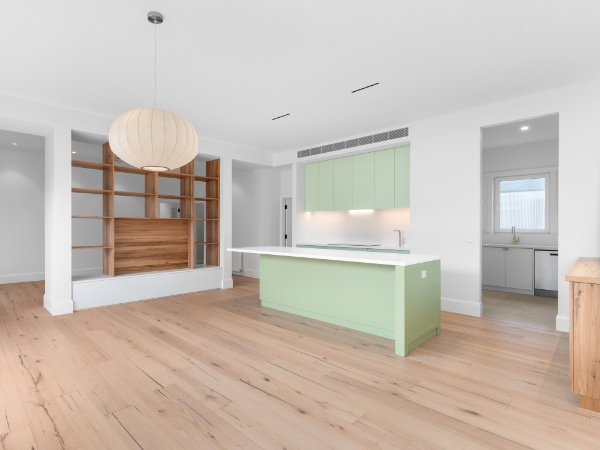
Image of Tanya’s Renovation. Photographer: Kip Scott
Amelia Lee
I love that. And the thing is that it reflects you. You get to feel like you’re in your own home, rather than playing this future safe. We used to joke at Mirvac that every time marketing asked us to do something, they would say, “Benign is fine.” And we would say, “Bland is grand.” As designers, we’d get really frustrated that we couldn’t bring colour into it. But for them, it was always about marketability, and it just appealing.
And slowly but surely, you’d start to put in pops of colour and that kind of thing, to really give it a bit of personality. But they were always pushing back against it being too directional. And so, when it is your own home, it’s this beautiful opportunity, and you can always do it in a way that somebody else can find their way of expressing themselves if they purchase your home. But I think when you’re doing your long-term home, for it to really walk in, and as you say, you just get to anchor. ‘This is the environment I’ve created for myself to then shelter me against the world. I can then come in, restore, relax, and then go out as the best version of myself again.’ And I think that’s just beautiful that you’ve been able to create that. Now, you made a conscious effort to reduce demolition waste, and you mentioned to me that you even made around $3,000 re-homing materials before everything started.
So, what was that like, and what did that teach you about being an active participant in your renovation? And was there anything that you had to do in particular to accommodate that as part of your project in the construction timeline, or anything like that?
Tanya
Yeah, reducing landfill was something that was really important to me. It’s something I do in my own personal life, but even more, so much waste that happens in construction. So, after we moved out, but before Anthony took it over as a site, I organised to put pretty much anything that was bolted to the wall onto Marketplace. And so, it was either going free or really cheap. I just wanted to move things on. Lot of things still had good life in them.
There was an oven here that was a really good brand oven. I run a gingerbread business on the side as well. And so, I knew it was a good oven. The key to putting things on Marketplace, good photos, include measurements, and tell people they have to take it out and remove it. So, it was really clear up front, and there’s a lot of mucking around with it. So, it’s not for everybody, I would say. But it was so important to me to try and save things from landfill and give things a longer life than just going into a skip. So, all of the wardrobes, the built-in wardrobes went, the fireplace mantels, double sash windows, bathroom vanities, shaving cabinets, towel rails, kitchen sink, anything and everything, some internal doors, things like that. Lot of free stuff, but otherwise just really low, low cost. And so, the time involved in it, of taking photos, placing the ads, interacting with people that muck you around, etc. Like I said, it’s not for everybody, but it was so worth it.
I met some really amazing, lovely people along the way as well. And there was a bit of mucking around with spending nine o’clock nights while they were removing wardrobes and things like that. But it felt good to have done that and make $3,000 on the side. Yeah, I think it was worth it. It made me feel good about doing the project as well. I think the key though, was that you got to remember about when it’s your home versus when it’s the builder’s site. And so, we were fortunate. We did have a few weeks between when we moved out and when Anthony took over, just to pay respect to his site and the safety rules and things like that. I’m not sure we could have done that if it was already a site environment and had random people coming onto a site and things like that. So, anybody who’s thinking about doing it, just be mindful of the safety side of home, it being a site versus being your home.
Amelia Lee
Yeah, well, it was great that you managed to accommodate that time between moving out and then Anthony taking over, because it gave you that window to be able to do that. A lot of people try and crunch it together. I know there are some builders who will do this themselves at the beginning of a project. They’ll pull things out and then sell them, or they’ll load them into their own warehouse for something that they’ll do later. But I think that the fact that you had that as a high priority for yourself, and then could then have conversations with Anthony and their team about how could that then map through the rest of the project too? It’s so worthwhile when you’ve got things that are personally valuable to you and your everyday life that you build that in alignment as well. So, thank you for taking us through that. You do have to deal with some interesting experiences when you dive into Facebook Marketplace. I’ve had that experience.
But equally, I know that one of our renovations when we were doing an old Queenslander, somebody had managed to get approval to demolish a home that was of similar age about three doors down. So, we went down and negotiated with the builder to salvage all of the windows so that we could reuse all of those. So, all of those windows got saved, and our home got to have that character look from the front on both levels with this new level we built in underneath, because the windows were very similar to the existing ones that we had in the home. So, construction industry, one of the largest contributors to waste worldwide. So, the more that we can repurpose these things, it really does make a big difference. So now, I wanted to talk a little bit more about you enjoying the process, because I think this is something that can really surprise people, that it’s even doable, and that it’s something that can be their experience.
A lot of people do feel like they have to armour themselves up. They have to just deal with the fact that this is going to be stressful and hard and challenging and perhaps involve a lot of prickly conversations and having to really keep an eye on things, and forcing for your voice to be heard. I always feel that it’s possible to enjoy your process. It doesn’t mean that it won’t come without stresses and hiccups and hurdles along the way, because it’s a deeply personal activity, and it’s a big undertaking, and often a big financial investment as well. Anything that has that combination of factors is going to have certain things come up, and you can be a bit blindsided by how it might be impacting you personally, and be surprised by how it lands with you in certain ways.
But what do you think was the key factor that meant this project didn’t have to be something that you just endured, but something that you actually enjoyed?
I think, probably, front-loading all those design decisions was a key factor to that. So, understanding how important it was to, through the design process, have already made all those decisions that was definitely going to take the stress and the time during the build phase. And it also meant that we weren’t second guessing all those design decisions down the track. Having that weekly meeting with Anthony on site was so enjoyable. I think the most stressful part of the process, actually, was when we’d done the original design and then we worked out that, but we got to the finer details of the budgeting, and we had to go through this value management process, which was, “Oh, actually, this is not going to fit into the budget that we thought it was going to.” But we had the whole team working together on that. So, the architect and ourselves and Anthony all working through where do we want to spend our money and where do we want to pull it back?
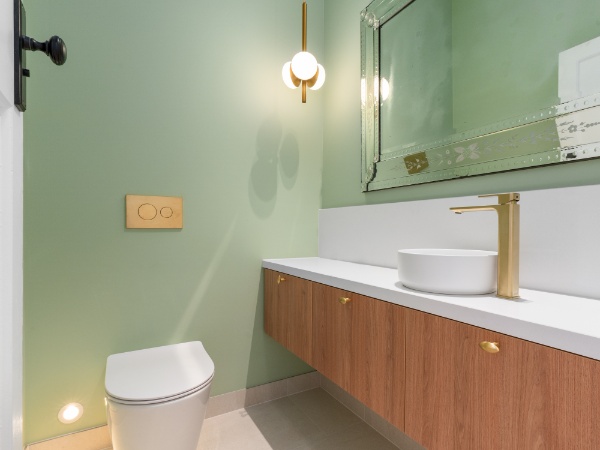
Image of Tanya’s Renovation. Photographer: Kip Scott
Tanya
And so that was stressful, but I’m so glad we went through that before the building started. Because if we were trying to do that while the building was happening, it would throw everything out, time-wise, money-wise, and everything. So, that definitely was a contributing factor, or that was helpful to have done all that. 100%, it was about the relationship that we had with Anthony and our builder. Getting the team right was so important, because we could do anything through that process then.
So, an example of something that happened, it’s an old house, it’s 100 years old. So, even just doing measurements of things and the plan for the renovation, it wasn’t always accurate. And so, there was going to be times where things came up that weren’t going to go to plan. And one of the things was the way that the ensuite shower was designed was that the shower door was meant to go off the side of the shower. And then when the glazier came, and Anthony was looking at it, and he was saying, “This is such a busy area, this door is going to swing out into your window sill, your hydronic panel, your towels, your toilet roll holder. It’s too busy in here. I think that the shower door needs to be on the end of the shower.” And when we went back to the designer and they were saying, “No, it’s going to look silly there. It needs to go back around the corner.” And we were conflicted. We just didn’t know which way to go. Put it out to the online community through HOME Method, and also just having had that trusted relationship with Anthony, we were able to work through that.
And we went with the decision to put the shower door on the end where it was going to make more sense to open up into a more spacious area. And I thank Anthony every single day when I have a shower, of having that relationship with him, to be able for him to have raised it, pushed for it, and helped us to make that decision. So, little things like that along the way. The communication was excellent. We really enjoyed working with him. But just going right back, just having done the education, feeling informed and confident meant that we didn’t have to endure this process. We enjoyed it because we felt like we were making the right decisions for our home and for our family, and we had the right people around us to be able to do that.
So, I’m so grateful to you, Amelia, for you being passionate about what you do, because I think you’re doing a remarkable thing of making a difference to people’s lives through the education that you’ve put together, and creating this community of people who are like-minded, who are trying to do better things for their homes. So I thank you for that.
Amelia Lee
Super kind of you, Tanya, thank you so much for saying that. I think what’s really amazing is, doing the pre-construction process, the PAC Process, and bringing Two Tone Construction on board during that design phase, you would have got to know each other so well, whilst you don’t have the burning pressure of construction unfolding, and really developing that shorthand in how to communicate with each other, the builder getting to know what was really important to you in the design phase.
And as you say, when you do, you inevitably hit a point where you have to value manage something. And having to do that during construction can be incredibly difficult, because you’re often reacting then to whatever has already been built. There’s only so much that you can leverage at that point. There’s a lot, you’re often backed into a corner, and it can feel like a massive compromise. Whereas, when you’re doing it during design, you can pivot and shift, whilst everything’s lines on a page and change is relatively cheap. And if you’re particularly doing it with a team of people that you’ve briefed really well, that have had the chance to get to know you and see you in action of your brief, like actually haven’t just made up your brief as a pipe dream. You’ve actually really thought about it, and then you’re living and breathing those things in the decisions that you make, it does mean that then professionals can bring their expertise to the table so much more effectively and really get in the boat with you of, “Okay, this is where we’re going to, this is what we think.”
And when you’re doing this for the first time, and you can’t always anticipate what you might need in the future or what might serve you well, to have the education to tap into, and then also a team who’s worked with people like you on other projects to say, “Look, we know that this might seem important now, but in the future, it may not be as big a deal to you.” And these kinds of things. And, “Remember, you said this was really valuable, so let’s elevate that.” And all of that kind of stuff. I think, even if you change your mind in that moment and say, you decide, “Well, no, we’re going to spend more money, or no, we’re going to change the goalposts. And we actually want to make that more important.” You’re doing it with intention. It’s not just unfolding reactively, chaotically, because you’re under time pressure and you’re wanting to get things done.
It’s done so intentionally that it all feeds into that pipeline of what you are seeking to achieve from the outset and what goals you really want that home to deliver on. And so, massive kudos to you, Tanya, because it can really be a big leap to feel like this is how you need to get prepared for your project. A lot of people think, ‘If I just find the right builder, if I just find the right architect or designer, surely they’re going to take all of it.’ It’s not just the investment in purchasing HOME Method, but you invested a lot of time in applying the resources, in actually going through the course content. You mentioned that time that you spent doing your brief, and even with this team, your project would not have gone as well as it did if you hadn’t upskilled yourself in the way that you did and prepared for your project, because you would have doubted, second guessed, not trust yourself, and that would have changed who you were and how you showed up in your project, in your relationship with them.
So, I think you need to give yourself a heck of a lot of credit, because you were an equal player. You and your partner were an equal player in making this project a success and in you getting to enjoy it because of the time, effort, energy and money that you invested in your own education and upskilling so that you could be that collaborative team partner. I think it’s absolutely tremendous what you were able to make happen in your project. And, yeah, your home, I think, is just a testament to that. And the fact that you did enjoy it. So, I really love that this has been your experience. It’s just brilliant. So, you’ve now been in your home a year. So, you moved in the beginning of last year. So, how does it feel? How does it feel to actually be living in the experience of the thing that, you said you had this home for, I think, a decade. You were obviously saving up the money. Obviously, this has been a long-held plan for you. What’s it like now to be getting to live in the fruits of your labour?
Tanya
So good. So, I love coming home every single day. I love walking through the spaces. On the weekends, Paul loves to cook, so Emily and I will sit at our kitchen bench and play a board game, eat some cheese, and just hang out together and just spend time together. And so, all the things that we put into our brief about how we wanted to live, taking me back to my childhood, that’s happening now. We invested some money into a really nice dining table, so it fits in beautifully into this space. And so, we have people around and entertain and it feels like a gorgeous space to welcome other people, as well as us to live in the home. We’ve done some things like there’s a bookcase that’s a divider between the kitchen-dining area separating, but still connected to the living space, where it’s really lovely to sit in there in the evening, because it feels cozy.
And going to bed at night, walking into our bedroom that’s now this beautiful sage green, feel calm in that space. Last night, Emily was dancing around in there because there’s more room around our bed. It’s a much better flow. And you always talked about having your bed facing away, so when you walk in, the head of the bed is at the other end. I listened to that, and that’s created this gorgeous space. As soon as you walk in the door and we’re dancing around, she’s like, “Oh, I love being in here.” So, all these things that we wanted to create in our home are happening now as a result of educating ourselves, getting the design right, and then having the right team on board, and we’ve made it happen. And it feels really good. The house feels thermally comfortable. It’s performing well. It feels beautiful to live in. I could not be happier.
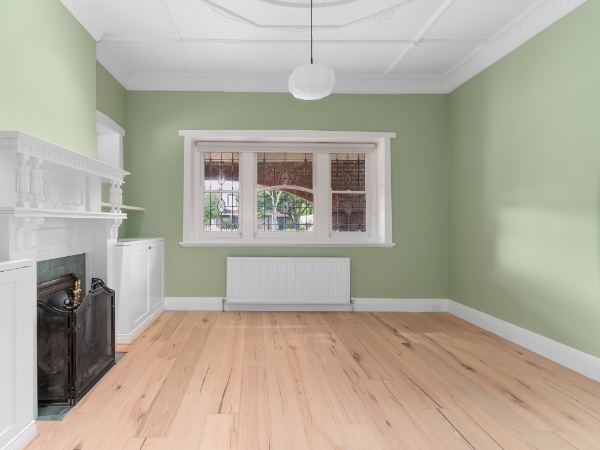
Image of Tanya’s Renovation. Photographer: Kip Scott
Amelia Lee
That’s so fantastic. Congratulations to you. It is all of those macro, micro decisions, isn’t it? We talk about the one metre to the five millimetre decisions, they all feed into how that home feels and functions at the end of the day. And so, it’s a lot to hold, and I love that you’ve been able to bring that all to life into your design and in that experience of building a really good quality home that’s energy-efficient, that’s functioning really well for you. And you’ve said a couple of times, you’re not a domestic goddess. You don’t like cleaning. I know I hate cleaning. I like living in a clean house, but I hate cleaning. And so yeah, we’re big believers of low maintenance, easy to maintain homes. Because, yeah, the last thing you want to be doing is creating this thing that’s just a weight around your neck, where you have to spend every weekend making it look decent again. But yet, that feeling of calm does come from a colour scheme, and it also comes from things being really well laid out, really well-organised so that everything has a place, you know where to find things, all of that kind of stuff feeds into how you feel in the home.
And so, it’s just so clear that you’ve been able to fuel your lived experience now with all of that forethought and attention to detail and that intentional approach. So, if someone’s listening right now and they feel overwhelmed or worried about getting wrong in their project, what would you actually say to them?
Tanya
I’d say it is absolutely possible to enjoy this process. And be patient with the time that you spend on doing your design brief. It’s critical. I think we live in a really fast world where instant gratification, it has become the norm, whereas if you take the time to put together a really solid design brief, the project will be less stressful, it will cost you less money, and you will love the place that you live in after you’ve done it.
Definitely front load all your decision-making up front. Get the right team involved. And do yourself a favor, no brainer, sign up for the HOME Method education because it will make a huge difference in your project. I’m not here to sell this to you, but I just really believe in it, and it’s made a huge difference in our experience, and I really believe that was because we were informed and educated from the start.
Amelia Lee
Thank you so much, Tanya, it has been such a joy to catch up with you and to hear all about this project. I have loved seeing what you’ve been able to create with this home. There are some amazing details in your home and the way that it’s worked. One of the ones that I know has been a favourite when I’ve shared it on social media is the sliding mirror over the window that’s on the rail, so that you could get both the window and the mirror over the vanity in that working.
And right through to the macro decisions of how the home looks from the street, it really does respect the original character of such a beautiful old home whilst breathing new life into it. And I particularly love how you have really put your stamp on it and help this home live a long way into the future, well beyond your occupation of it. I know it’s going to serve other people really well when you decide to move on eventually. And meanwhile, it’s going to be such a gorgeous place for you and your family to live. So, thank you so much for sharing your experience, sharing your knowledge, your insights. I know that others will find this super helpful, and it’s been so lovely to have this time with you, Tanya, thank you.
Tanya
You too. Thanks, Amelia.
RESOURCES
Check out Part 1 of my conversation with Tanya:
- Episode 394 ‘How to Plan a Great Renovation from the Start, with Tanya’ >>> https://undercoverarchitect.com/podcast-how-to-plan-a-great-renovation/
Check out these podcast episodes:
- Episode 359 ‘Getting it Right in Your Renovation, with Builder, Anthony Hickey, Two Tone Construction’ >>> https://undercoverarchitect.com/podcast-getting-it-right-in-your-renovation-builder-anthony-hickey-two-tone-construction/
- Episode 360 ‘Getting the Best Build Experience, with Builder, Anthony Hickey, Two Tone Construction’ >>> https://undercoverarchitect.com/podcast-getting-the-best-build-experience-builder-anthony-hickey-two-tone-construction/
Access the support and guidance you need (like Tanya did) to be confident and empowered when renovating and building your family home inside my flagship online program, HOME METHOD >>> https://undercoverarchitect.com/courses/the-home-method/
Learn more about how to interview and select the right builder with the Choose Your Builder mini-course >>> https://undercoverarchitect.com/courses/choose-your-builder
My free ’44 Ways’ E-Book will simplify sustainability for you, and help you create a healthy, low tox and sustainable home – whatever your dreams, your location or your budget. Access your copy here >>> https://undercoverarchitect.com/ways

 With over 30 years industry experience, Amelia Lee founded Undercover Architect in 2014 as an award-winning online resource to help and teach you how to get it right when designing, building or renovating your home. You are the key to unlocking what’s possible for your home. Undercover Architect is your secret ally
Leave a Reply